SCAMS are Real and they HURT
Just like the title of this blog, Scams are real and they hurt. I’m tired of being scammed as an actor. You really have to watch out and this is my story: The past couple of weeks, I was lead to believe that I was conversing and auditioning for a real casting director of HBO MAX. Sent a stellar audition and even signed off on a role I was offered with a Zoom meeting all set up for this upcoming week. Now, I did my research and by the way this was from Backstage, I did my research and I was already skeptical from the beginning as I have been burnt from roles and opportunities in the past. It’s kind of like AI - you don’t know what’s real anymore and it hurts. Am I used to this by now and being scammed….yes to the point now where I don’t trust anyone. But I also feel like if I don’t take a chance, I could miss out on my big break. It’s heartbreaking and yes this is a setback. I am very fragile at this point. I try to research as much as I can with companies and making sure they’re legit, but sometimes that’s not enough.
Continuing on with the scam, all was good until the project said that I must be SAG-AFTRA and they had a rep that could help me with that. I was like ok, I get this, not a problem, until their so called rep e-mailed me and it looked legit, except for one thing, the email was sent from a .net and not .org. I had been researching SAG-AFTRA and all of their emails ended in .org so I decided to email them about a possible scam and someone got back to me right away, indeed it was. Next email I got from the fake company said I can pay my dues by PayPal, bank account or bit coin….bit coin…..absolutely not and that was a major red flag in red flag city as I know as well as anything else, dues should only be paid through SAG-AFTRA on their website or via phone. I’m no genius, but I know when it’s game over.
Since then, I have reported the people and emails to SAG-AFTRA as it was the correct thing to do. Not only did they pretend to be from SAG-AFTRA, but also stole the identity of a real casting director from HBO MAX and you should never, ever do that. They stole the identity and photo as well to make it look legit. That’s not right at all. Please do your research on anyone who reaches out to you to do any kind of acting. Also, know that you are not alone if you have ever been scammed. If you have, please comment down below.
I am posting some screenshots of when it all went south and the scam took place as well as the role I was offered. Again, I am heartbroken and would have loved to work on “Hacks” with Jean Smart as she has been an inspiration to me for a long time and is so funny. I really wish this wasn’t a scam. Again, left heartbroken and now less trusting.
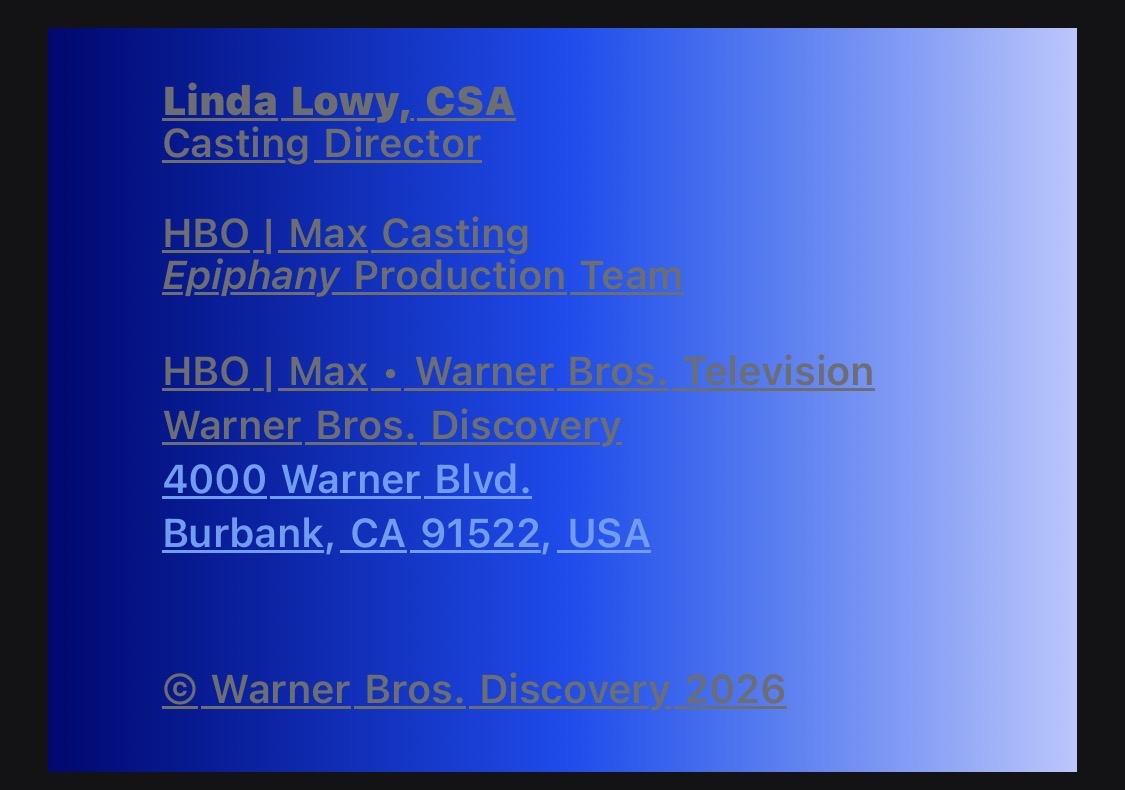
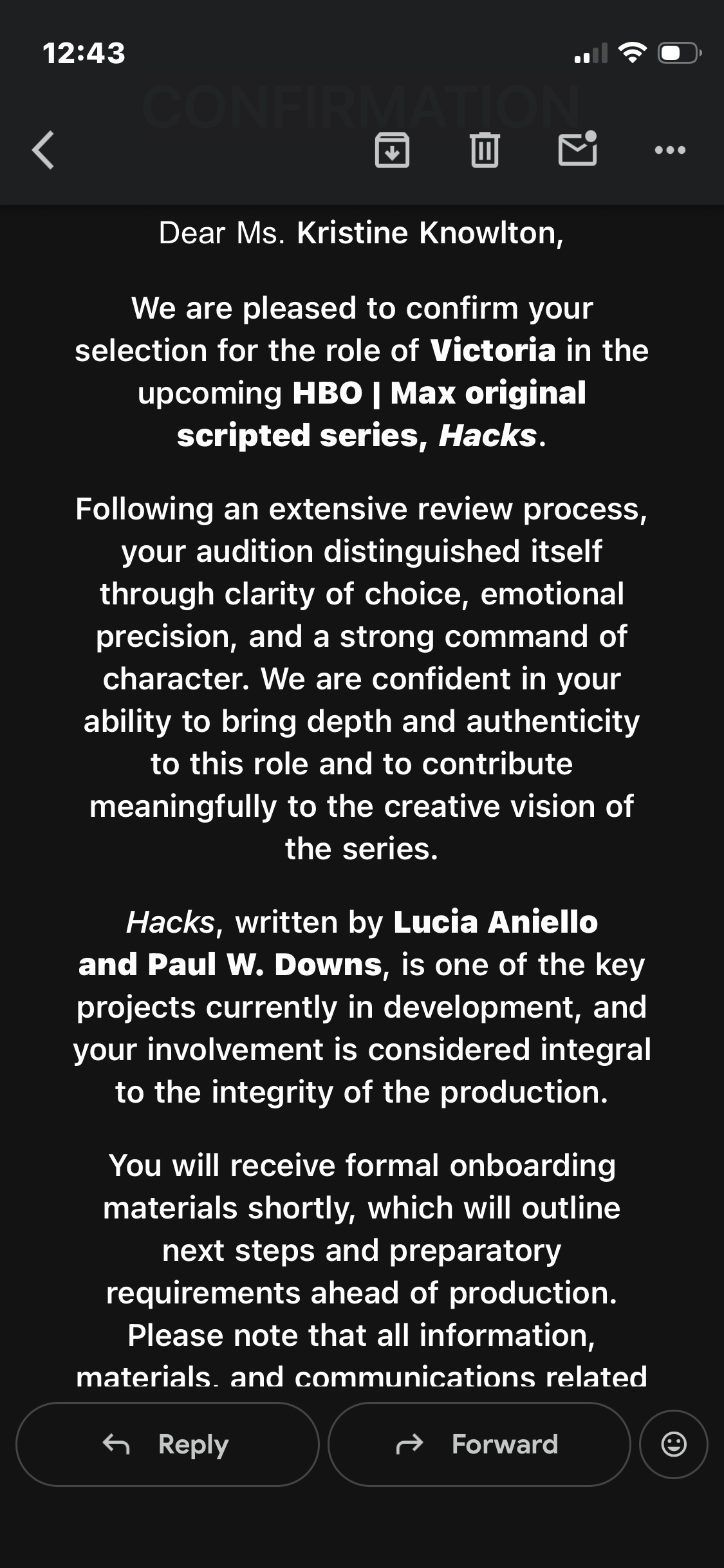
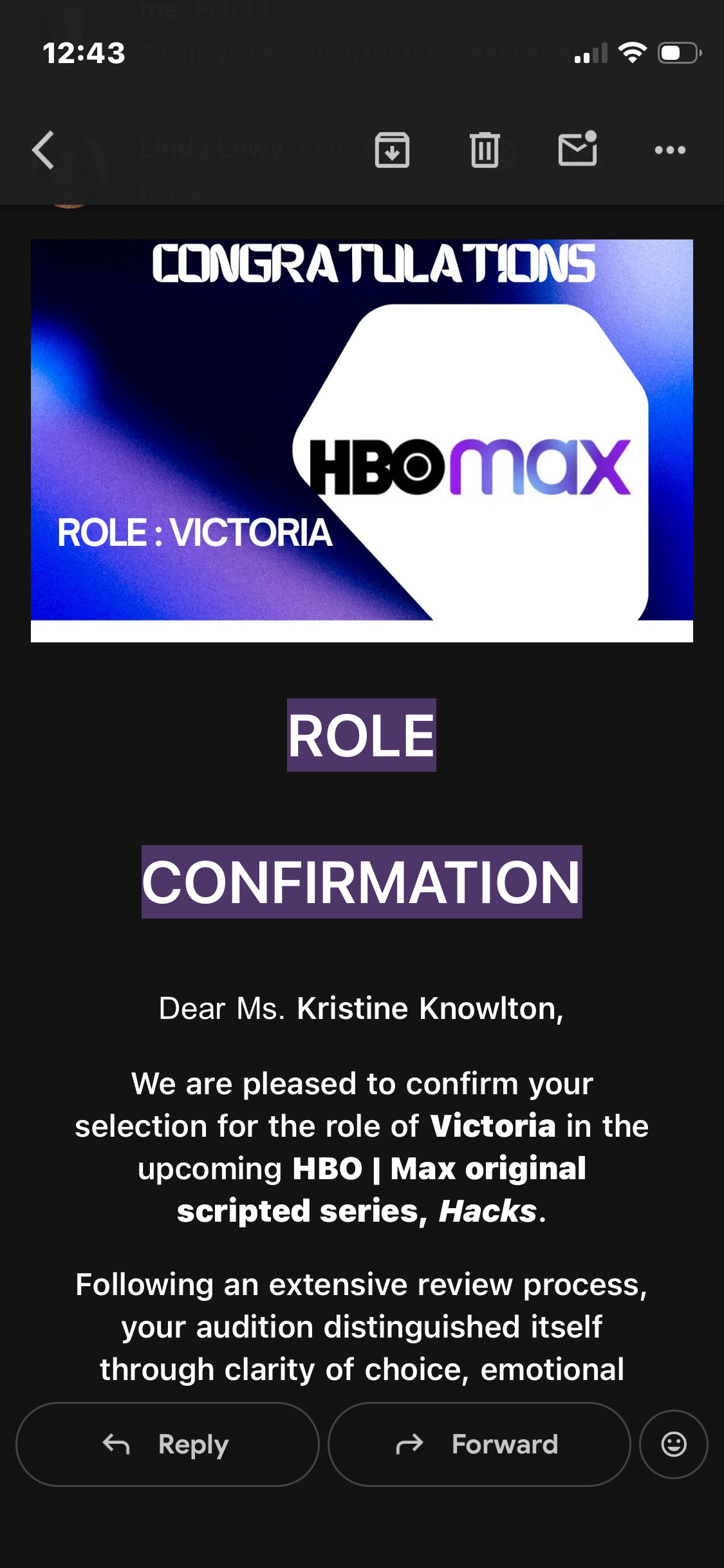
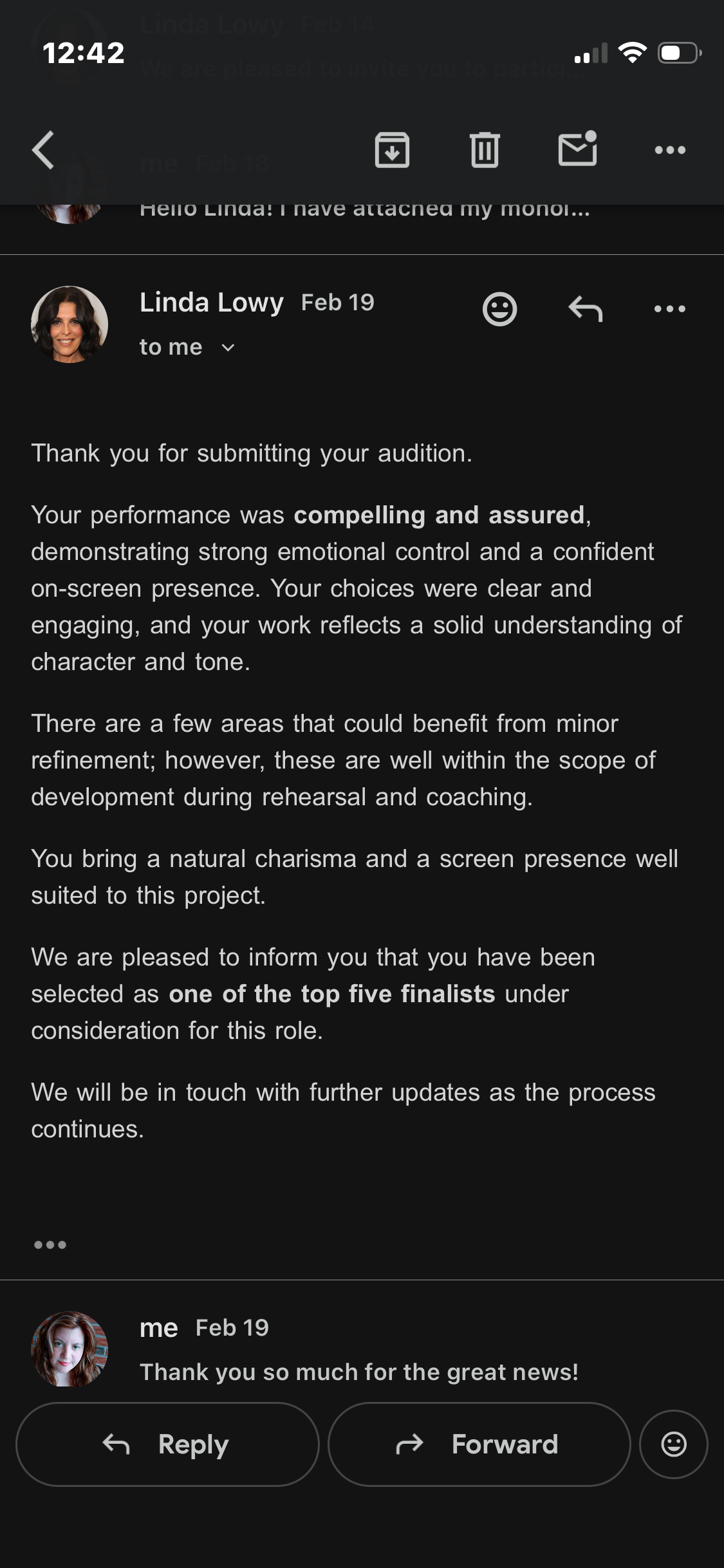

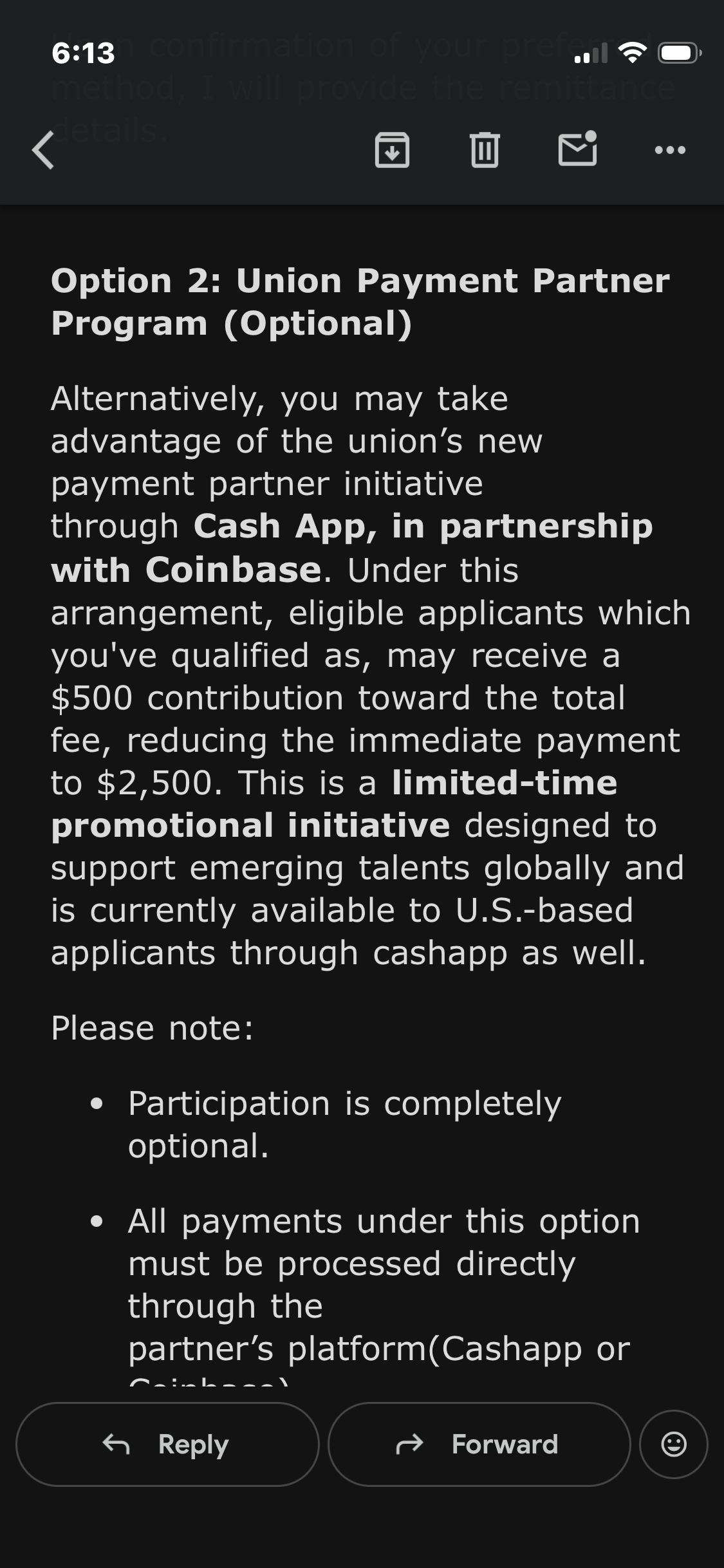
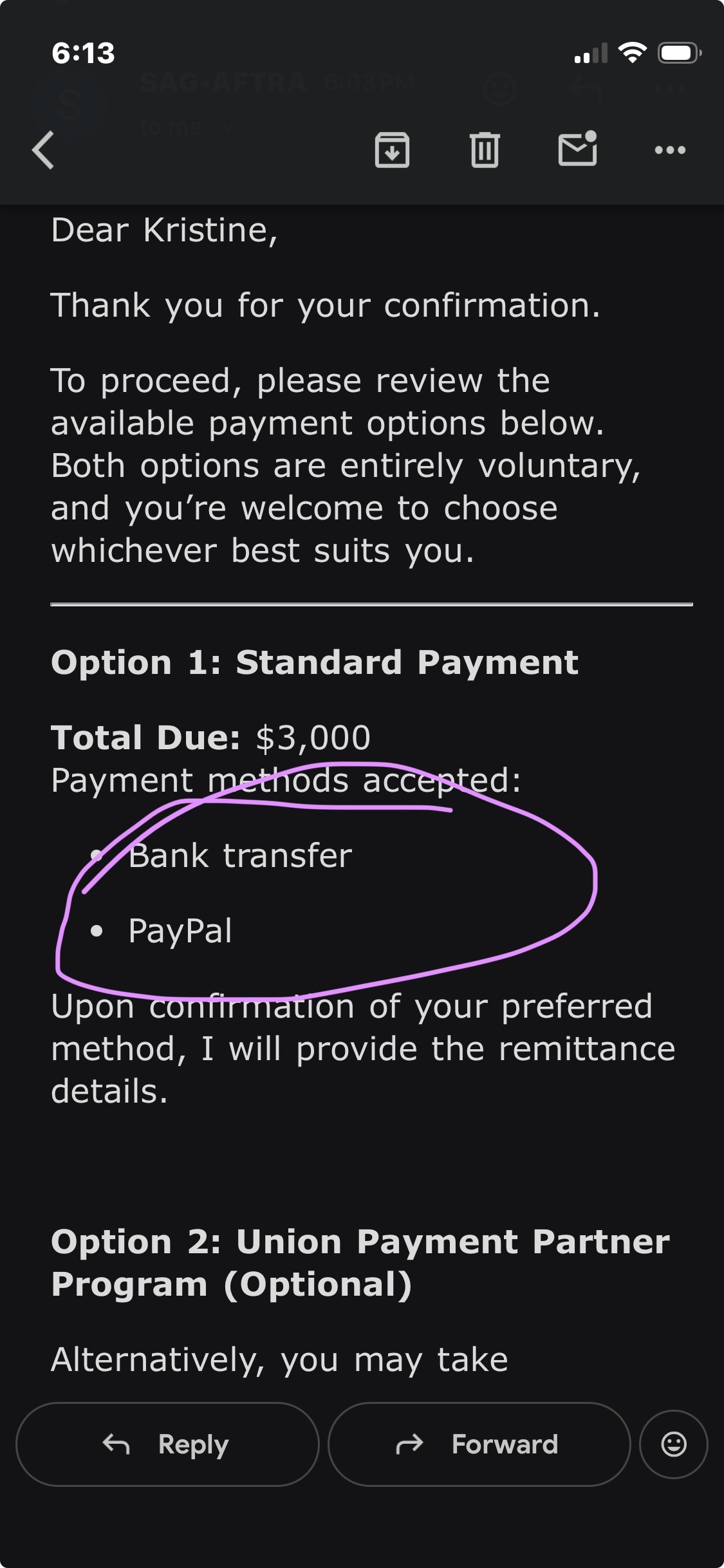
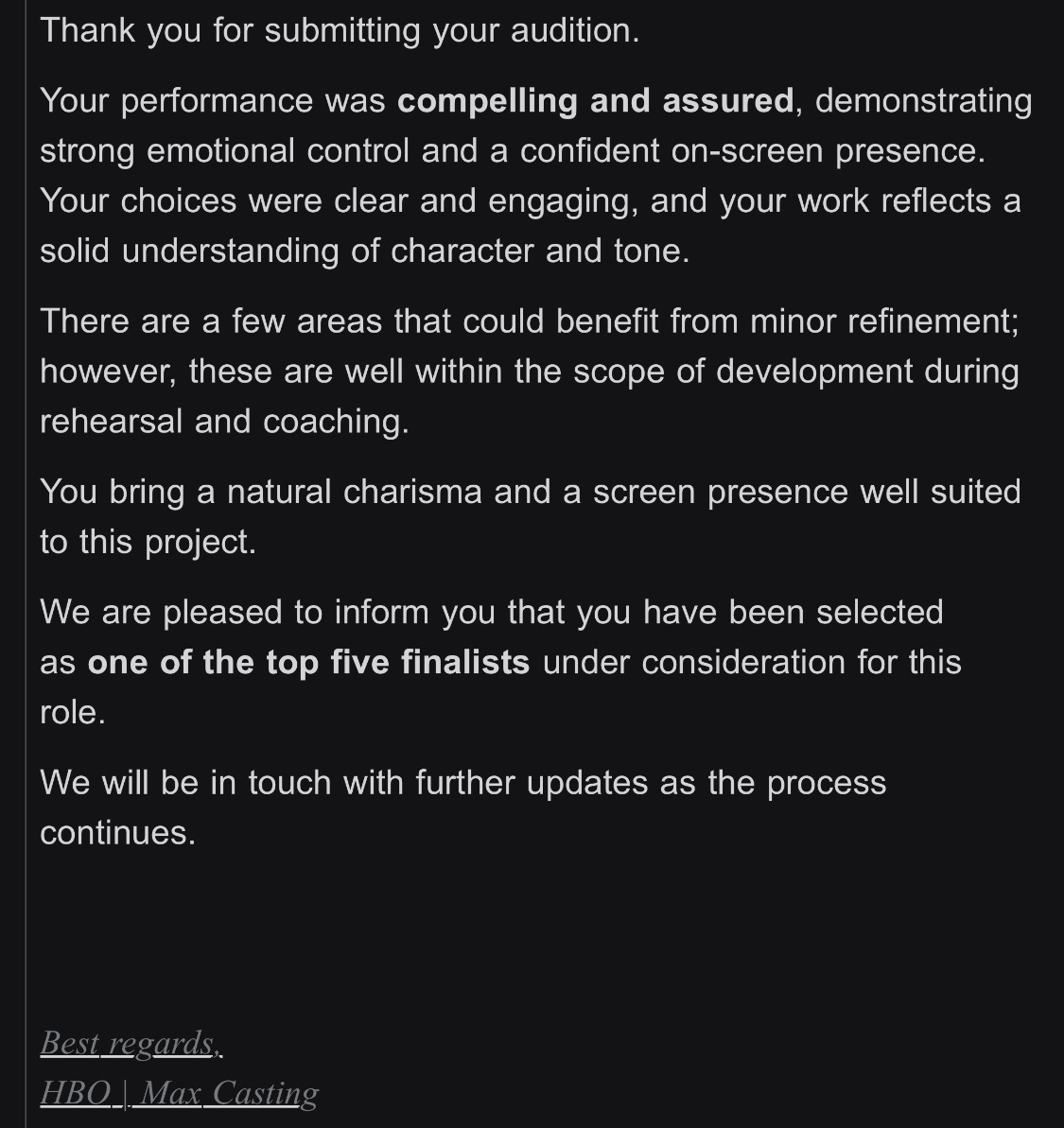
And here’s the audition monologue I submitted and got great feedback on, which was probably full of shit, but hey as long as it’s in writing, it counts right!?! I feel as though I did a great job and was happy with the outcome.
How to Find a Voiceover Agent or Manager (and Whether You Actually Need One)
For many voiceover artists, getting an agent or manager feels like the moment things become official. Someone else is submitting you, advocating for you, and helping you reach bigger opportunities. But representation isn’t a magic switch — it’s a professional partnership that works best when you already have a solid foundation in place.
Whether you’re just starting out or ready to level up, here’s a realistic guide to finding a voiceover agent or manager, along with the pros and cons of having one.
First: Do You Actually Need an Agent Yet?
Before pursuing representation, ask yourself a few honest questions:
- Do you have professionally produced demos in your main genres (commercial, narration, animation, etc.)?
- Are you consistently booking work on your own?
- Do you have a treated recording space and broadcast-quality audio?
- Can you deliver auditions and jobs quickly and professionally?
Agents typically look for talent who are already working — not talent who are still learning the basics. Think of an agent as an amplifier, not a starting engine.
What’s the Difference Between an Agent and a Manager?
Voiceover Agent
- Submits you for auditions
- Negotiates contracts and rates
- Takes a commission (usually 10–20%)
- Focuses primarily on booking work
Manager
- Helps guide career direction
- Advises on branding and marketing
- May help with long-term strategy
- Usually takes a higher percentage
Many voice actors only have an agent, especially early in their careers.
How to Find a Voiceover Agent or Manager
1. Build Strong, Targeted Demos
Your demo is your calling card. Agents listen for:
- Natural performance
- Audio quality
- Range and authenticity
- Market readiness
One strong commercial demo is better than five average demos.
2. Research Agencies That Fit Your Type
Not every agency is right for every voice. Look for agencies that:
- Represent voices similar to yours
- Work in your target market (commercial, animation, corporate, gaming)
- Accept submissions from non-union or union talent
Check submission guidelines carefully — ignoring them is a quick way to get passed over.
3. Network Within the Industry
Many agents discover talent through referrals. Ways to connect include:
- Voiceover workshops and conferences
- Online industry communities
- Coaching sessions with established professionals
Organizations like SAG-AFTRA events and voiceover conferences can also be great networking spaces, even if you’re not union yet.
4. Submit Professionally
Your submission email should include:
- A short introduction
- Your demos (links, not attachments)
- Studio specs
- Booking highlights (if applicable)
Keep it brief. Agents listen first — they read later.
5. Keep Working Independently
Even after signing, most voice actors continue to find work through:
- Direct clients
- Casting sites
- Personal marketing
Representation is one part of a larger career ecosystem.
Pros of Having a Voiceover Agent or Manager
✅ Access to Higher-Level Auditions
Agents often receive casting opportunities not posted publicly, including major brands and national campaigns.
✅ Negotiation Support
An agent understands industry rates and usage rights, helping you avoid underpricing your work.
✅ Industry Credibility
Representation can signal professionalism to clients and casting directors.
✅ Time Saved
Instead of searching for every opportunity yourself, submissions come to you.
Cons of Having a Voiceover Agent or Manager
❌ Commission Fees
Agents take a percentage of booked work. If you already generate steady income independently, this can feel significant.
❌ No Guaranteed Work
An agent provides access — not bookings. You still have to audition and perform.
❌ Less Control Over Submissions
You may not know every opportunity you’re being submitted for.
❌ You Still Need to Market Yourself
Many new voice actors assume agents replace self-promotion. They don’t.
The Truth Most Beginners Don’t Hear
Agents want talent who make their job easier. That means:
- Reliable audio
- Fast turnaround
- Consistent performance
- Professional communication
The best way to get an agent is often to become successful enough that they notice you first.
Final Thoughts
An agent or manager can be a powerful career partner — but only when the timing is right. Focus first on becoming a strong, bookable talent. Build relationships, improve your craft, and treat your voiceover work like a business.
When you’re ready, representation won’t feel like a rescue — it’ll feel like a natural next step.
Resting Your Voice Without Resting Your Career: What Voice Actors Can Do While on Vocal Rest
For voice actors, being told to rest your voice can feel like being benched during the championship game. When your instrument is your voice, silence can feel unproductive, frustrating, and even a little scary — especially when you have goals, auditions, and projects waiting.
But vocal rest doesn’t have to mean career rest.
In fact, some of the most productive work you can do as a voice actor happens when you’re not behind the mic. When you’re sick, recovering from strain, or simply giving your voice the downtime it needs, it’s the perfect opportunity to work on your business instead of in it.
Here are smart, productive, voice-friendly things you can do while your vocal cords heal.
1. Update Your Website
Your website is your digital storefront, and it’s often the first impression casting directors and clients have of you.
Vocal rest is a great time to:
- Update your bio and make sure it reflects your current brand and personality
- Refresh your headshots or promo images
- Organize or replace outdated demos
- Check that all links and contact forms work properly
- Improve SEO by updating keywords related to your voice type and niches
Ask yourself: If a client landed on my site today, would they immediately understand what I offer?
This is quiet work that pays off long after your voice has recovered.
2. Refresh Your Voiceover Resume
When was the last time you updated your resume?
Use this downtime to:
- Add recent work or training
- Remove older or less relevant credits
- Reorganize categories (commercial, animation, narration, e-learning, etc.)
- Clean up formatting for readability
A polished resume makes submissions faster once you’re back to recording.
3. Organize Your Back-End Business
Voiceover work is part performance, part small business ownership. Vocal rest is ideal for catching up on the behind-the-scenes tasks that often get pushed aside.
Consider:
- Organizing files and session folders
- Backing up audio projects
- Updating invoices and bookkeeping
- Cleaning up email templates for client communication
- Creating audition tracking spreadsheets
Future-you will be very grateful.
4. Study Without Speaking
You can improve your performance skills without making a sound.
Try:
- Watching commercials or animation and analyzing delivery styles
- Studying pacing, tone, and emotional beats
- Reading scripts silently and marking intentions
- Taking online workshops where participation doesn’t require speaking
- Listening to top voice actors and noting trends
Training your ear is just as valuable as training your voice.
5. Write and Create Content
If you create content, this is a perfect time to stay visible without vocal strain.
Ideas include:
- Writing blog posts or newsletters
- Planning social media content
- Writing future scripts or sketch ideas
- Outlining podcast episodes for when you’re well again
- Creating content calendars
Creative momentum doesn’t have to stop just because you’re quiet.
6. Improve Your Studio Setup
No talking required.
Use this time to:
- Reorganize your recording space
- Improve sound treatment
- Label cables and equipment
- Update software or plugins
- Learn editing shortcuts or workflow improvements
Technical upgrades now mean smoother sessions later.
7. Rest Without Guilt
This might be the hardest one.
Your voice needs recovery time just like any other muscle. Pushing through illness or strain can lead to longer downtime or even injury. Resting now prevents bigger problems later.
Hydrate. Sleep. Steam. Let your body do its job.
Remember: recovery is not lost time — it’s maintenance for a long career.
Final Thoughts
Voice actors are storytellers, performers, editors, marketers, and business owners all in one. When illness or strain forces you to step away from the microphone, it doesn’t mean you’re falling behind.
It means you’re being given a chance to strengthen the foundation of your career.
Your voice will come back stronger — and when it does, you’ll be ready.
Because sometimes the most productive thing a voice actor can do… is be quiet.
Why Practicing for Voiceovers Isn’t Optional (It’s the Job)
If you want to succeed in voiceovers, practicing isn’t a “nice extra” you do when you have time.
It is the work.
A lot of people think voiceover is about having a “good voice.”
Spoiler alert: it’s not.
It’s about control, consistency, emotional range, and stamina—and those only come from practice.
Even seasoned pros still practice. Not because they’re unsure, but because the mic never lets you fake it.
Practice Builds Muscle Memory (Not Just Confidence)
When you practice regularly, your voice learns how to respond without panic:
- You stop sounding stiff on first takes
- Your breath supports you instead of sabotaging you
- Emotional shifts happen faster and cleaner
- Cold reads don’t feel like free-falling off a cliff
Practice teaches your body what good feels like—so when a real audition hits, you’re not scrambling.
Practicing Teaches You Emotional Control
Voiceover isn’t about “reading lines.”
It’s about delivering emotion on demand—sometimes back-to-back, sometimes with zero context.
You might audition for:
- A heartfelt nonprofit
- A sarcastic commercial
- A cheerful explainer
- A gut-punch audiobook scene
All in the same day.
That range doesn’t magically appear. You train it.
Practice Lines: Run These Like a Workout
Say each line out loud, not in your head.
Record yourself. Listen back. Adjust. Repeat.
🎭 Neutral / Conversational
“We’ll take care of everything—you just enjoy the ride.”
Focus on sounding real, not polished.
😊 Happy / Upbeat
“This is the best decision you’ll make all week!”
Lift the smile into your voice without sounding fake or forced.
❤️ Warm / Compassionate
“You’re not alone, and you don’t have to figure this out by yourself.”
Slow down. Let the words land.
😠 Angry / Frustrated
“I’m tired of being ignored—and I won’t stay quiet anymore.”
Energy doesn’t mean yelling. Control the fire.
😢 Sad / Vulnerable
“I thought if I stayed strong, it wouldn’t hurt this much.”
Let the breath crack just enough. Don’t overplay it.
😈 Sarcastic / Snarky
“Oh, sure. Because that worked so well last time.”
Timing is everything. Bite, don’t bark.
😨 Fear / Panic
“We don’t have much time—please, you have to listen to me.”
Shorter breaths. Higher stakes.
😌 Calm / Reassuring
“Take a breath. We’ll figure this out together.”
Ground your voice. Lower your pace.
🤪 Comedic / Exaggerated
“This was not part of the plan. Not even a little bit.”
Commit fully or don’t do it at all.
Practice Also Trains Consistency (The Real Secret Weapon)
Clients don’t just want a great take.
They want the same voice again tomorrow.
Practicing helps you:
- Match tone across multiple takes
- Hold character for long sessions
- Maintain energy without vocal strain
- Avoid burning out your voice
That’s what makes you bookable.
How Often Should You Practice?
Short answer: often, but smartly.
- 10–20 minutes a day beats one long weekly session
- Rotate styles: commercial, narration, character
- Always warm up first
- Stop before strain—not after
Consistency matters more than intensity.
Final Thought
Practicing for voiceovers isn’t about perfection.
It’s about preparedness.
When opportunity shows up—an audition, a callback, a surprise booking—you don’t rise to the occasion.
You rise to the level of your practice.
So grab a script.
Make weird sounds.
Feel the emotions.
And do it again tomorrow.
Your future bookings will thank you.
Why Vocal Warmups and Rest Matter—Especially When Deadlines Are Looming
In the world of voiceovers, deadlines are part of the gig. Clients want fast turnarounds, last-minute pickups happen at 9 PM, and sometimes you’re juggling multiple projects at once. But here’s the truth every working (or aspiring) VO artist needs to hear:
Your voice is your instrument—and it’s the only one you can’t replace.
Warmups and rest aren’t optional extras or “nice if I have time” tasks. They’re essential, non-negotiable parts of your workflow that actually help you meet your deadlines with better quality and less stress.
Let’s break down why.
1. Warmups Protect Your Voice—So You Don’t Burn Out Mid-Project
Ever try to record a character voice cold? Yeah… that ends in vocal fatigue faster than you can say “copy points.”
Warmups:
- Increase your vocal flexibility
- Open up your range
- Reduce strain during long sessions
- Help you hit emotional beats with ease
Think of it like stretching before a workout. You can run cold, but you’ll probably regret it halfway through.
Even five minutes of gentle humming, lip trills, or straw phonation can prevent a day’s worth of hoarseness.
2. Resting When You Need It Keeps Your Quality High
Voiceover working culture sometimes pressures artists to grind nonstop:
Wake up → record → edit → submit → repeat.
But here’s the reality: pushing past vocal fatigue doesn’t make you productive—it makes your performance worse.
Your tone drops.
Your diction muddles.
You start sounding tired (because you are tired).
Rest isn’t laziness. It’s maintenance. Hydration, silence breaks, naps, and stepping away from the mic can make the difference between a retake-heavy disaster and a clean recording that gets approved on the first pass.
3. Warmups + Rest = Faster Recording Sessions
This is where deadlines come in.
When you warm up:
- You do fewer takes
- You hit emotional shifts more naturally
- Your pacing gets smoother
- You avoid vocal cracks and strain
When you rest:
- You recover quicker between projects
- You stay consistent in tone
- You can maintain long-term output
Together, warmups and rest don’t take time—they save time. What’s better than meeting deadlines? Meeting them without sacrificing your voice.
4. Protecting Your Voice Protects Your Career
Deadlines are important—absolutely. Being reliable is how you get hired again and again.
But losing your voice? That’s how you miss deadlines.
A day of forced rest because you pushed too hard can derail more than you planned. A few minutes of prep and listening to your body keeps you in the game for the long haul.
Remember: clients want great work, not rushed work from a strained voice.
5. Create a Workflow That Balances Discipline and Care
Here’s a simple rule of thumb:
Warm up before you record. Rest when you feel strain. Communicate when you need time. Meet deadlines with a healthy voice.
A professional voice actor doesn’t just deliver—it’s how they deliver that makes them successful.
Final Thoughts
Deadlines matter, but your vocal health matters more. Warmups and rest aren’t excuses—they’re part of the job. Taking care of your voice not only keeps you performing at your best, but it also builds a sustainable, long-term VO career.
Treat your voice like the valuable instrument it is, and it will take you further, faster, and with fewer “sorry, I need a redo tomorrow” moments.
Why It’s Okay to Say “No” to Voiceover Auditions
In the voiceover world, we’re taught that auditioning is everything. The more auditions you do, the better your chances—right? Sure. But here’s the part many beginners (and even seasoned pros) forget:
You are allowed to say no.
You’re allowed to decline auditions, turn down opportunities, and walk away from projects that aren’t right for you.
And not only is it okay… it’s healthy, strategic, and downright necessary for a long, sustainable voiceover career.
1. Your Voice Is Your Instrument—Protect It
Just because an audition is available doesn’t mean it’s good for your vocal health.
Shouting, extreme character voices, long-form narration, or poorly written scripts can strain your vocal cords. If something feels like it will hurt your voice, stepping back isn’t unprofessional—it’s responsible.
A healthy voice today means more opportunities tomorrow.
2. Not Every Project Aligns With Your Brand
As you build your career, your brand becomes a compass.
Ask yourself:
- Does this script fit my voice style?
- Is the content aligned with my values?
- Would I be proud to share this work later?
If you feel a hesitation in your gut, trust it. Saying “no” helps you build a portfolio you’re excited about—not one you tolerate.
3. Time Is a Resource—Auditioning Isn’t Free
Auditions take energy, creativity, and time. Some can take minutes; others take hours.
When you say yes to every audition, you’re spreading yourself thin and draining energy that could go toward:
- training
- marketing
- invoicing
- better auditions that suit your strengths
Your time is valuable. Use it intentionally.
4. Saying No Creates Space for Better Yeses
Every audition you decline frees up bandwidth for projects that:
- fit your voice perfectly
- pay fairly
- respect your time
- excite you creatively
There’s a strange magic in turning things down—suddenly the right opportunities begin to stand out more clearly.
5. It Makes You Look More Professional, Not Less
Contrary to what beginners often fear, declining an audition does not make you look flaky.
In fact, it signals:
- awareness of your vocal range
- respect for deadlines
- confidence in your abilities
- commitment to quality
Casting directors appreciate talent who know what’s right for them. It saves everyone time and boosts your reputation.
6. You Don’t Owe Anyone Access to Your Talent
This one is big.
As a voice actor, your voice, time, creativity, and energy are all part of your professional toolkit.
You have every right to choose when and how you offer them.
If something doesn’t feel right—ethically, vocally, financially, or creatively—you’re allowed to decline without guilt.
7. “No” Is a Form of Self-Care
Burnout in the voiceover industry is real.
Sometimes the healthiest thing you can do is step back and say:
“This one isn’t for me.”
Protecting your mental, creative, and emotional energy is vital for longevity in this field.
Final Thoughts
Saying no isn’t about being picky—it’s about being purposeful.
You deserve to work on projects that value your talent, support your career goals, and allow you to bring your best performance to the booth.
So the next time an audition pops up and you feel that hesitation?
Listen to it.
Respect it.
And remember: a thoughtful ‘no’ today can lead to an outstanding ‘yes’ tomorrow.
How to Handle Rejection From Voiceover Auditions (Without Losing Your Mind)
If you’re auditioning for voiceover work, congratulations—you’re already doing the hard part. Auditioning is the job.
But let’s talk about the part no one loves: rejection.
You submit an audition, feel good about it, maybe even great about it… and then—nothing. No booking. No feedback. Just silence.
Here’s the truth: rejection in voiceover is normal, constant, and not personal—even when it feels personal.
First: Reframe What “Rejection” Really Means
Most of the time, you weren’t rejected.
You just weren’t the exact puzzle piece they needed.
Casting decisions often come down to things you cannot control:
- Age range
- Accent
- Vocal texture
- Energy level
- Client preference
- Someone sounding like “the director’s cousin’s neighbor”
Seriously.
You can deliver a perfect read and still not book because they already imagined a different voice in their head.
Silence Is Not a Verdict on Your Talent
In voiceover, no response is common. Casting directors and clients don’t have time to reply to hundreds—or thousands—of auditions.
No feedback does not mean:
- You were bad
- You’re not good enough
- You should quit
It means they moved on quickly, and you should too.
Separate Your Self-Worth From the Audition
This is critical.
You are not your last audition.
You are not your booking ratio.
You are not your dry spell.
Every audition is just one data point—not a judgment of your value or potential.
Treat auditions like reps at the gym:
You don’t walk out stronger after one lift.
You get stronger by showing up consistently.
Focus on What You Can Control
You can’t control who gets booked—but you can control:
- Audio quality
- Clear, confident reads
- Following directions exactly
- Turnaround time
- Consistency
Each audition is a chance to improve—not a test you pass or fail.
Track Wins That Aren’t Bookings
Not all wins come with money attached.
Wins include:
- You auditioned even though you felt tired
- You nailed a read faster than last month
- You took direction better than before
- You submitted and let it go
Progress often shows up quietly.
Don’t Chase Every “No” for Meaning
It’s tempting to spiral:
“Was my tone wrong?”
“Did I mess up that word?”
“Am I even good at this?”
Stop.
Unless feedback is explicitly given, don’t invent reasons. That mental energy is better spent on the next audition.
Build a Healthy Audition Mindset
Here’s a mindset shift that helps many voice actors:
Submit. Release. Move on.
Once it’s sent, it’s out of your hands. Obsessing won’t change the outcome—but it will drain your motivation.
Remember: It’s a Numbers Game
Working voice actors book a small percentage of auditions—sometimes 1–5%. That’s not failure. That’s the business.
Every audition you submit increases your odds long-term, even when it doesn’t feel like it in the moment.
When Rejection Starts to Hurt
If rejection is hitting harder than usual:
- Take a short break
- Work on a passion project
- Revisit why you started
- Listen to old recordings and hear how far you’ve come
Burnout doesn’t mean you’re weak—it means you care.
Final Thought
Rejection doesn’t mean you’re bad at voiceover.
It means you’re in voiceover.
Keep showing up. Keep auditioning. Keep improving.
The right yes is out there—and it often comes after a lot of quiet no’s.
How to Stay Motivated When You’re Just Starting Out in Voiceovers
Starting out in voiceovers is exciting… and overwhelming. One minute you’re dreaming of commercials, cartoons, and audiobooks, and the next you’re staring at your inbox wondering why no one has booked you yet.
If you’re new to voiceovers and struggling to stay motivated, you’re not alone. Every working voice actor has been exactly where you are now. The good news? Motivation isn’t something you magically “have” — it’s something you build.
Here’s how to keep going when the beginning feels slow.
1. Understand That Slow Progress Is Normal
Voiceovers rarely provide instant wins. Unlike traditional jobs, you can audition dozens of times before hearing back — if you hear back at all.
This doesn’t mean you’re failing. It means you’re building experience.
Think of auditions as reps at the gym. You don’t walk in expecting visible muscles after day one. The growth happens quietly, over time.
Mindset shift:
Auditioning is the job. Booking is the bonus.
2. Set Small, Achievable Goals (Not Dream-Crushing Ones)
Telling yourself “I want to book my first national commercial” is inspiring… but not always motivating on hard days.
Instead, focus on goals you can control:
- Record 3 auditions today
- Practice one new script style
- Learn one new Audacity shortcut
- Update one profile or demo clip
Small wins stack fast — and momentum loves consistency.
3. Use What You Have (And Stop Waiting for “Perfect”)
You don’t need:
- A $1,000 microphone
- A professional booth
- An agent on day one
Many voice actors start with:
- A phone or entry-level mic
- Free software like Audacity
- A closet, blanket fort, or treated corner
Waiting for “perfect” equipment can quietly kill motivation. Progress happens when you start messy and improve along the way.
4. Track Your Work Like a Business
One of the fastest motivation killers is feeling like you’re doing “nothing” — even when you’re working constantly.
Keep track of:
- Auditions submitted
- Practice sessions
- Skills learned
- Feedback received
When you look back and see how much you’ve done, it reinforces that you are moving forward — even if bookings haven’t landed yet.
5. Create Even When There’s No Work
No auditions today? That doesn’t mean no progress.
Use quiet days to:
- Record passion projects
- Practice character voices
- Create fake commercials
- Read scripts just for fun
Some of the strongest skills — and confidence — come from creating without pressure.
6. Protect Your Motivation From Comparison
Scrolling through social media can be inspiring… or completely defeating.
Remember:
- You’re seeing highlight reels, not timelines
- Many “overnight successes” took years
- Your path will not look like anyone else’s
If comparison starts draining you, step back and refocus on your growth, not someone else’s milestones.
7. Find Community (Even a Small One)
Voiceover can feel lonely — especially at the start.
Look for:
- Online VO groups
- Discord servers
- Casting Call Club forums
- A single accountability buddy
Having people who get it makes the slow days easier and the wins even sweeter.
8. Reconnect With Why You Started
On the tough days, ask yourself:
- Do I love storytelling?
- Do I enjoy playing with my voice?
- Do I feel alive creating characters or reads?
If the answer is yes — that’s your fuel.
Voiceovers don’t have to start as a full-time career. They can start as joy, curiosity, and exploration.
Final Thought: Motivation Follows Action
You don’t need to feel motivated to move forward.
Often, motivation shows up after you take action.
Record anyway.
Audition anyway.
Practice anyway.
The voiceover industry rewards the people who stay — not the ones who rush.
And if you’re still here?
You’re already doing something right.
Voiceovers for Fun vs. Building a Voiceover Business from Scratch
If you’ve ever thought, “I’ve been auditioning forever… why isn’t this working yet?”—you’re not alone.
One of the biggest misconceptions about voice acting is that it’s a quick win. Record a demo, land an agent, book a job, done. In reality, becoming a working voice actor is a slow build, and quitting too early is the number one reason people never make it.
Voice Acting Is a Long Game, Not a Lottery Ticket
Voice acting isn’t about talent alone. It’s about consistency, skill-building, and patience. Most working voice actors didn’t book their first paid job for months—or even years—after they started.
Why? Because:
- You’re developing your voice, not just using it
- You’re learning mic technique, acting choices, pacing, and delivery
- You’re finding your “types” and strengths
- You’re building trust with casting directors who need to hear you many times before they book you
No one hears one audition and says, “That’s it, career unlocked.” They hear you over and over, improving each time.
Auditioning Is the Work
This part trips people up.
Auditions aren’t a side task.
They are the job—especially early on.
If you’re not booking yet, your success is measured in:
- How many auditions you submit
- How consistently you show up
- How much better your reads are compared to last month
Working voice actors often audition 5–20 times a day. Some book 1 out of every 50 auditions. Others book 1 out of 100. That’s normal.
If you only audition when you “feel inspired,” you’re treating voice acting like a hobby. If you audition even when you don’t feel like it, you’re treating it like a business.
Rejection Isn’t Personal—It’s Part of the Process
Casting decisions are rarely about you.
It could be:
- They already cast someone with a similar voice
- They needed a different age, tone, or energy
- The client changed their mind
- Your read was great, just not the right fit
Most auditions don’t come with feedback. Silence doesn’t mean failure—it means you were one of many options.
Every audition you submit:
- Builds stamina
- Sharpens your instincts
- Makes you faster and more confident
- Puts your name in casting databases
Even the “no’s” are doing work for you.
Progress Happens Quietly Before It Happens Loudly
You won’t always notice growth in real time.
You might not realize:
- Your cold reads are smoother
- Your turnaround time is faster
- You’re making stronger acting choices
- You’re booking callbacks instead of nothing
- You’re getting repeat auditions from the same casting directors
These are signs you’re moving forward—even if the bookings haven’t exploded yet.
The People Who Succeed Are the Ones Who Don’t Quit
Most voice actors don’t fail because they lack talent.
They fail because they stop showing up.
The ones who make it are the ones who:
- Audition consistently, even when it’s discouraging
- Keep learning and adjusting
- Treat auditioning like a daily practice
- Understand that momentum takes time
There is no finish line where it suddenly becomes easy. There is only progress, persistence, and growth.
If You’re Feeling Stuck—Keep Going
If you’re auditioning and not booking yet, you’re not behind.
You’re in training.
If you’re tired, take a break—but don’t give up.
If you’re discouraged, remember why you started.
If you’re frustrated, know that every working voice actor has been exactly where you are.
Voice acting rewards the people who stay.
Keep auditioning.
Keep learning.
Keep showing up.
Your voice belongs somewhere—and it often takes many auditions before the right project finds you.
Voiceovers for Fun vs. Building a Voiceover Business from Scratch
Voiceover can start as something magical.
You record a silly character voice.
You narrate a TikTok.
A friend says, “You should totally do voiceovers.”
And suddenly… you’re in.
But there’s a big difference between doing voiceovers for fun and building a voiceover business from the ground up—and knowing which path you’re on can save you time, money, and burnout.
Let’s break it down.
Voiceovers for Fun: The Hobby Lane
Doing voiceovers for fun is completely valid. In fact, it’s how most of us begin.
What this looks like:
- Recording when inspiration strikes
- Playing with characters, accents, and reads
- Posting clips on social media just because
- Auditioning occasionally (or not at all)
- No pressure, no deadlines, no spreadsheets
Why it’s great:
- Low stress
- Creative freedom
- No financial expectations
- Perfect for experimentation and learning
If voiceover is your creative outlet, a way to play, or something you do between other projects, that’s wonderful. Not everything needs to be monetized.
But here’s where people get stuck…
The Gray Area: When Fun Starts to Feel Frustrating
Many voice actors don’t decide to build a business—they accidentally drift into it.
You start auditioning more.
You buy better gear.
You wonder why you’re not booking.
You get irritated when work doesn’t come in.
That frustration is usually a sign of one thing:
👉 You’re expecting business results while treating voiceover like a hobby.
And that’s a recipe for burnout.
Making Voiceover a Business: A Whole Different Mindset
Building a voiceover business from scratch doesn’t mean selling your soul or losing your creativity. It means treating your talent like a service—and yourself like a professional.
What this actually involves:
- Consistent auditioning (even when you don’t feel like it)
- Tracking auditions, callbacks, and bookings
- Learning about pricing, usage, and contracts
- Creating demos with intention
- Marketing yourself on purpose
- Thinking long-term, not “overnight success”
A business mindset asks:
- Where is my time going?
- What’s working?
- What’s not?
- How can I improve my booking ratio?
It’s not glamorous—but it is empowering.
The Biggest Difference? Intention.
Here’s the truth most people don’t say out loud:
Fun voiceover = expression
Business voiceover = responsibility
Neither is better than the other—but mixing them without clarity causes chaos.
When voiceover is a business:
- You show up even on uninspired days
- You learn from rejection instead of taking it personally
- You measure progress in consistency, not just bookings
- You invest in growth strategically, not impulsively
You Can Switch Lanes (Or Drive Both)
This isn’t a one-way road.
You can:
- Start with fun and move into business
- Step back into “just for fun” when life gets heavy
- Run a business and keep passion projects just for joy
The key is honesty.
Ask yourself:
- Do I want income from this?
- Am I willing to treat this like work?
- Am I okay if this stays a creative outlet only?
Your answer can change—and that’s okay.
Final Thoughts
Voiceover doesn’t owe you money.
But if you want money from voiceover, it does require structure, consistency, and accountability.
There’s no wrong way to do voiceover—only misaligned expectations.
So choose your lane.
Or build your own road.
Just don’t beat yourself up for not knowing which one you’re on yet.


